TrustMinutes Services: Innovative Online Services
A Comprehensive Guide to Trustee Meeting Minutes: Best Practices & Templates
Trustee meeting documentation plays a fundamental role in governance structures. They establish transparency and accountability while preserving key decisions and discussions. Maintaining best practices can significantly enhance the effectiveness of these minutes. However, many organizations overlook crucial details or fall into common traps. Understanding the key elements and legal requirements is vital for compliance. What specific strategies can organizations utilize to enhance their minute-taking processes?

Importance of Trustee Meeting Minutes
Although often overlooked, trustee meeting minutes perform a critical function in sustaining transparency and accountability within an organization. These records register decisions arrived at during meetings, delivering a clear chronicle of the discussions and resolutions. By registering the essence of each meeting, minutes permit stakeholders to grasp the rationale behind decisions and actions implemented.
Moreover, they act as an essential reference for future meetings, ensuring continuity and informed participation among trustees. Apart from preserving organizational memory, trustee meeting minutes are vital in demonstrating compliance with legal and regulatory requirements. They safeguard the organization by providing evidence of due diligence and proper governance.
In the end, accurate and timely minutes promote trust among stakeholders, as they show a commitment to accountability and responsible management. Therefore, the value of trustee meeting minutes cannot be underestimated in the effective operation of an organization.
Essential Components of Efficient Meeting Minutes
Well-crafted meeting minutes are defined by concise and clear language, ensuring that all information is simple to grasp. Moreover, recording action items and responsibilities is essential for accountability and follow-up. Finally, a thorough record of the date and attendees aids in establishing context and maintain an accurate historical record.
Clear and Concise Language
Clear and concise language is essential for crafting effective meeting minutes, as it strengthens comprehension and retention of key information. Employing straightforward terminology allows readers to comprehend the essence of discussions without confusion. Preventing jargon, overly complex sentences, and unnecessary details ensures that the minutes remain accessible to all stakeholders. Each point should be communicated clearly, reflecting the weight of decisions made and discussions held. In addition, using bullet points or numbered lists can help arrange information, making it easier to navigate. The goal is to provide a precise account that accurately captures the meeting's essence while remaining brief. In summary, clarity and brevity in language foster efficient communication and ensure that the meeting minutes serve their intended purpose effectively.
Tasks and Responsibilities
Meeting records should not only capture conversations but also clearly specify action points and obligations assigned during the meeting. This practice guarantees accountability and follow-through among participants. Each action item must be specific, detailing what needs to be completed, who is responsible for completing it, and the deadline for completion. This clarity helps stop misunderstandings and promotes productive workflow. Furthermore, it is essential to note the context in which these responsibilities were assigned, as this can provide crucial insights during future discussions. By documenting these elements thoroughly, trustee meeting minutes serve as a reliable reference that improves organizational effectiveness and fosters a culture of accountability among board members and stakeholders.
Record of Date and Attendees
When documenting trustee meetings, noting the date and attendees is essential for establishing context and accountability. This information serves as a reference point for later discussions and determinations. The date specifies when the meeting was held, helping to track the timeline of actions and resolutions made by the trustees. Recording attendees, including their roles and associations, guarantees transparency and clarifies who took part in the decision-making process. This practice not only promotes a sense of obligation among trustees but also provides a clear record for stakeholders who may need to review meeting outcomes. Effective minutes should therefore include the full names of attendees and specify any absences, ensuring a complete account of participation and engagement during the meeting.
Effective Methods for Taking Minutes
Proper record keeping is crucial for effective meeting minutes, ensuring that all decisions and discussions are recorded properly. Using clear and concise language helps to convey the information without ambiguity, making it available to all stakeholders. Adhering to these best practices improves the overall quality and usefulness of the minutes.
Exact Recordkeeping
Strong record keeping is crucial for documenting trustee meeting minutes, as it guarantees that all discussions and decisions are accurately captured for future reference. To achieve this, it is advisable to appoint a dedicated individual responsible for minute-taking. This person should be knowledgeable with the agenda and key topics to confirm thorough coverage. Utilizing a standardized template can streamline the process and enhance consistency across meetings. It is also advisable to record the date, time, and location of each meeting, as well as a list of attendees and any absentees. In addition, trustees should review minutes promptly to confirm accuracy before distribution, guaranteeing that any necessary corrections are made. This diligent approach fosters transparency and accountability within the organization.
Simple and Clear Language
Clear and precise wording serves a vital function in documenting trustee meeting minutes, as it makes certain that the information conveyed is easily interpreted by all stakeholders. Using straightforward terminology helps eradicate ambiguity, guaranteeing that essential decisions and discussions are accurately reflected. Minutes should refrain from using jargon and complex sentence structures, focusing instead on clarity. Each point should be presented succinctly, allowing readers to grasp the essence of discussions quickly. Additionally, employing bullet points or numbered lists can enhance readability and facilitate quick reference. By giving priority to clear language, trustees can confirm that minutes serve as effective records that are accessible to all, encouraging transparency and accountability within the organization. This approach ultimately reinforces communication among board members and stakeholders alike.
Key Missteps to Dodge
While navigating through the complexities of trustee meetings, individuals often run into several common pitfalls that can undermine the effectiveness of the process. One typical error is the failure to document decisions precisely, which can result in confusion and disputes later. Furthermore, omitting to include important details, such as the names of attendees or the date of the meeting, may generate incomplete records that lack legal validity.
Another typical error is neglecting to follow a consistent format, which hinders clarity and makes it hard to locate specific information quickly. Furthermore, leaving out follow-up actions or deadlines can impede accountability and hinder progress on important issues. Lastly, failing to review and approve the minutes in a timely manner can create gaps in communication and transparency among trustees. By recognizing and avoiding these pitfalls, trustees can ensure that their meeting minutes serve as reliable and effective records.
Template Examples for Trustee Meeting Minutes
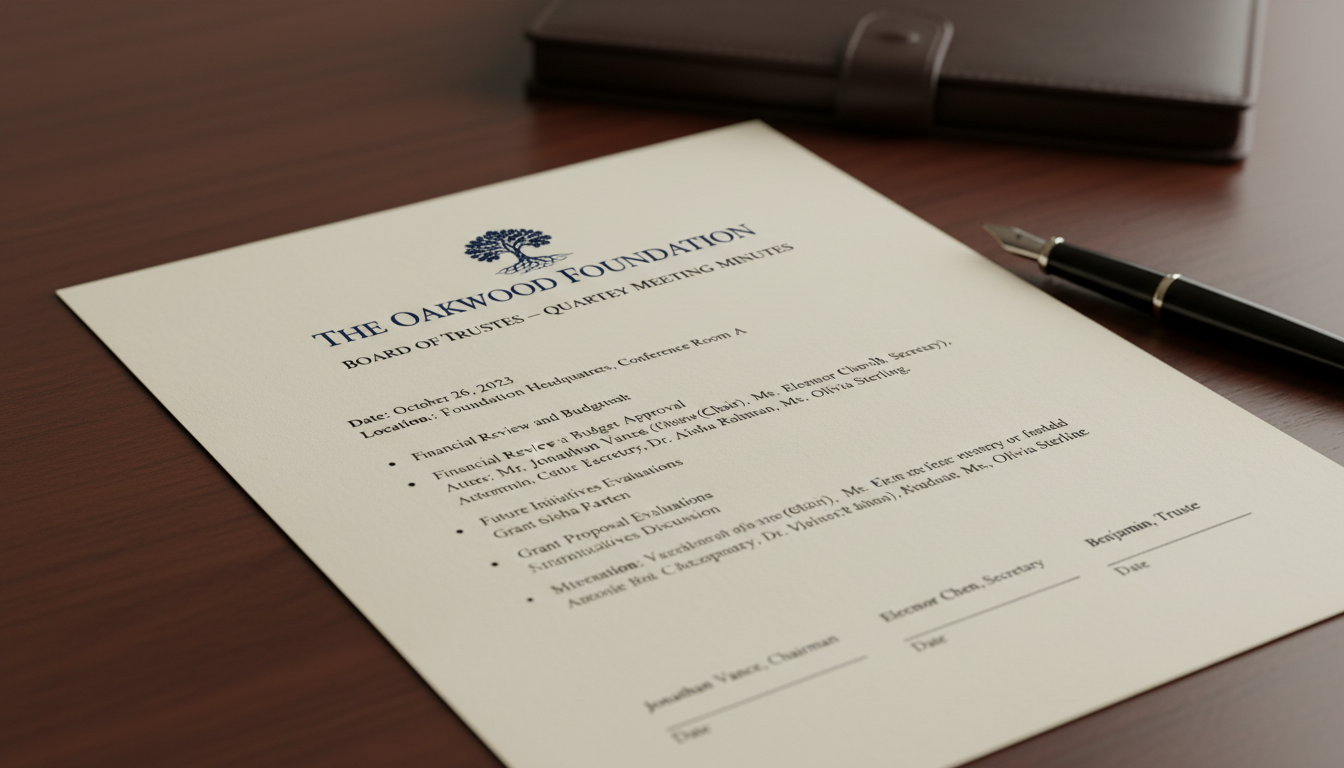
A well-structured template can greatly enhance the efficiency of documenting trustee meeting minutes. Using a standardized format assists in guaranteeing that all essential elements are captured consistently. A sample template typically includes sections for the meeting date, time, and location, along with a list of attendees and absentees.
After that, the agenda items ought to be outlined to steer the discussion. Each agenda item can incorporate subsections for key points, decisions made, and action items assigned, ensuring clarity in follow-up responsibilities.
In addition, a section for capturing other important talks or announcements can be included.
Finally, the template should include space for the signature of the note-taker or chairperson, validating the documentation. By employing such templates, organizations can simplify the process of taking minutes, guaranteeing thoroughness and compliance with organizational standards.
Legal Considerations and Compliance
Understanding the legal aspects and compliance standards is essential for organizations holding trustee meetings. Complying with local laws and regulations guarantees that meetings are carried out in a legally sound manner, thereby safeguarding the interests of both the organization and its stakeholders. Organizations must be cognizant of the particular statutory mandates, such as notice periods, quorum provisions, and voting thresholds, as these can differ significantly by jurisdiction.
In addition, proper documentation is essential. Minutes should accurately reflect the proceedings, decisions made, and any dissent expressed during the meeting. This not only supports transparency but also provides a legal record that can be consulted in future disputes or audits. Organizations should think about consulting legal experts to establish an understanding of applicable laws and best practices, securing compliance and safeguarding their operations against potential liabilities. By giving priority to legal considerations, organizations can encourage trust and accountability among their trustees and stakeholders.
Tips for Maintaining and Storing Records
The effective maintenance and storage of records is critical for the integrity of trustee meetings. Organizations should establish a systematic approach to record management, making certain that all meeting minutes, agendas, and related documents are both secure and readily accessible. Digital storage solutions, such as cloud services, can supply both security and convenience, enabling organized categorization and quick retrieval.
It's recommended to set up a well-defined retention policy, detailing how long records should be retained based on legal obligations and organizational needs. Regular audits of stored records can help pinpoint antiquated or irrelevant documents that may be securely archived or discarded.
Moreover, making sure that only authorized personnel have access to sensitive records is vital to maintaining confidentiality. By following these best practices, organizations can boost accountability and facilitate smooth transitions during audits or legal inquiries. Proper record maintenance demonstrates the professionalism and commitment of the trustees involved.
Frequently Asked Questions
What Is the Recommended Frequency for Trustee Meetings?
Trustee meetings should typically be held at least quarterly to ensure sound governance and oversight. That said, the frequency may differ according to the needs of the organization, circumstances, and the complexity of the issues being addressed.
Who Bears the Responsibility for Recording Meeting Minutes?
The responsibility for taking meeting minutes typically falls to the board's secretary or an appointed individual. This person guarantees accurate documentation of action items, decisions, and discussions for later reference and accountability.
Can You Amend Minutes Once They're Approved?
After approval, minutes may be amended if required. Generally, this involves a formal process that includes proposing an amendment motion during a later meeting, ensuring transparency and accuracy in the recorded proceedings of the organization.
What Format Should Be Used for Meeting Minutes?
Meeting minutes ought to be organized clearly and systematically, typically including headings for the valuable guide date, attendees, agenda items, discussions, decisions made, and action items. This structure enhances readability and guarantees all critical information is recorded effectively.
What Is the Required Duration for Retaining Meeting Minutes?
Meeting minutes should usually be maintained for a minimum of 3 to 5 years, based on legal requirements and organizational policies. This retention period guarantees accessibility for future reference, audits, and reviews relating to decisions made.